
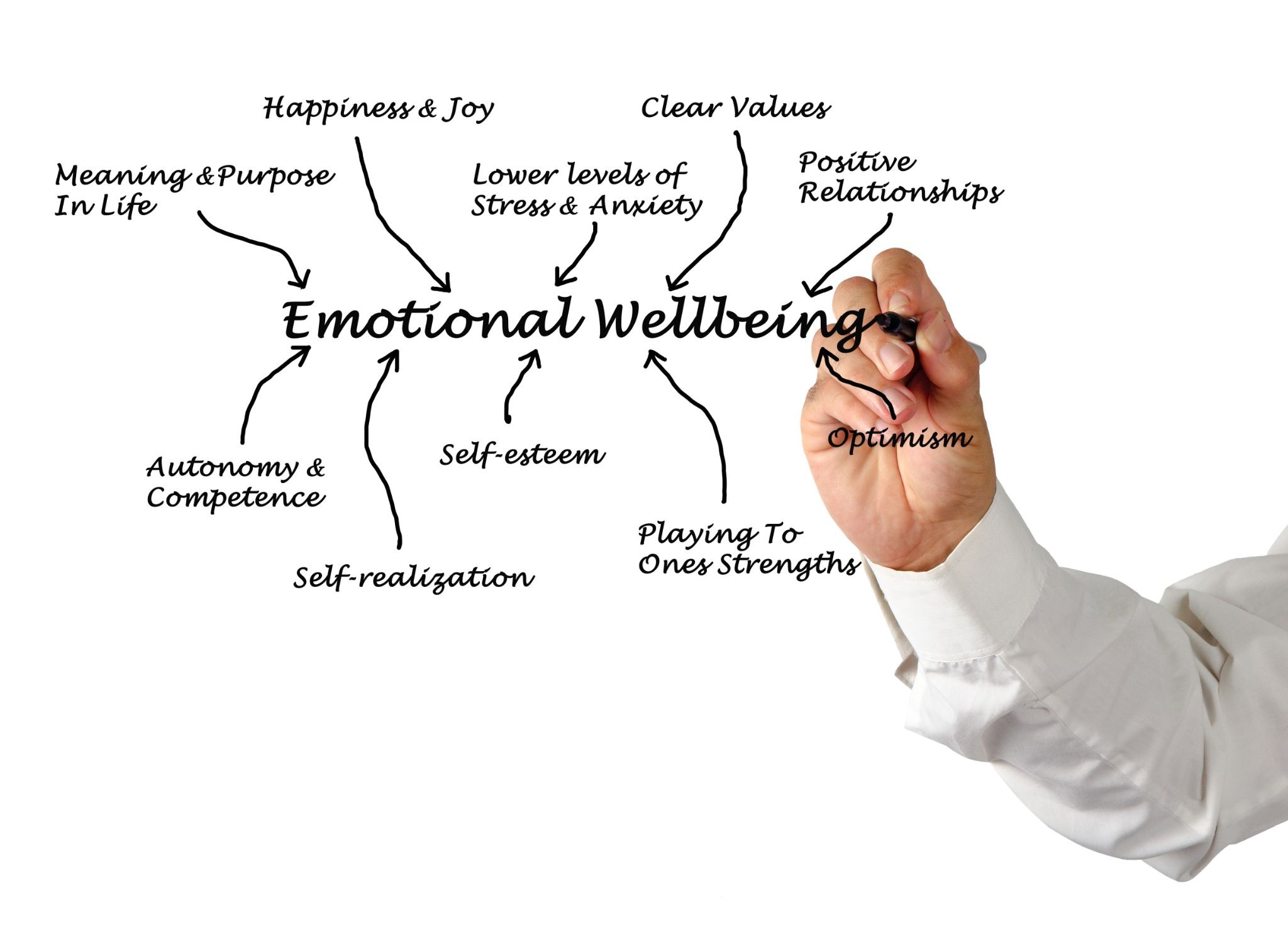
Most people have a decent understanding of physical health. You eat well, sleep enough, exercise regularly, and see a doctor when something feels off. Emotional health is less visible, harder to measure, and easier to ignore until something goes wrong. Yet research in psychology and neuroscience consistently shows that emotional health is just as consequential as physical health, and the two are far more connected than most people realise. This post goes beyond the basics to look at what emotional health actually involves, why experts consider it central to overall wellbeing, and what it takes to build it deliberately over time.
What Emotional Health Actually Means
Emotional health is not the same as being happy all the time. That is a common misconception that leads people to think they are emotionally healthy when life feels good and emotionally unhealthy when it does not. What it actually refers to is the ability to understand your own emotions, manage them in ways that serve you, and recover from difficulty without being permanently destabilised by it.
Psychologists often describe emotional health in terms of emotional regulation, self-awareness, and resilience. A person with strong emotional health can feel anxious before a difficult conversation and still have that conversation. They can feel grief after a loss without being consumed by it indefinitely. They can experience frustration, disappointment, or anger and process those feelings without harming their relationships or their own sense of self. None of this means suppressing emotion. It means having a functional relationship with your inner life.
Dr. Susan David, a Harvard Medical School psychologist and author of Emotional Agility, makes the point that the problem is not difficult emotions themselves but the way people relate to them. Trying to eliminate negative feelings or push them aside consistently creates more psychological distress, not less. Genuine emotional health involves what she calls agility: the ability to be with your emotions honestly, without being ruled by them or defined by them.
The Science Behind Emotional Health and the Body
How Emotions Affect Physical Health
The mind and body are not separate systems operating in parallel. They are deeply integrated, and emotional states produce measurable physiological responses. Chronic stress, unresolved grief, persistent anxiety, and suppressed anger all activate the body’s stress response, raising cortisol levels and keeping the nervous system in a state of low-grade alert. Over months and years, this contributes to elevated inflammation, weakened immune function, disrupted sleep, and increased risk of cardiovascular disease.
Research published in journals including Psychosomatic Medicine and the Journal of the American Medical Association has consistently linked chronic negative emotional states with poorer physical health outcomes across multiple conditions. People with depression have significantly higher rates of heart disease. People with unmanaged anxiety show faster cellular aging markers. The direction of influence runs both ways, since physical illness also affects emotional states, but the evidence that emotional health directly shapes physical health is well established and no longer considered peripheral in medicine.
The Nervous System Connection
When the body perceives threat, whether from a real physical danger or an emotionally charged situation, the sympathetic nervous system activates. Heart rate increases, digestion slows, and the brain prioritises immediate threat response over long-term thinking. This is useful in genuine emergencies. It becomes harmful when the nervous system stays in that state due to chronic emotional distress.
The parasympathetic nervous system, sometimes called the rest-and-digest system, is responsible for returning the body to calm after a stressor passes. In people with strong emotional health, this return to baseline happens relatively quickly. In people with poor emotional regulation or significant unresolved trauma, the nervous system stays elevated for longer, which keeps the body in a state of chronic physiological stress. Building emotional health is, in a very literal sense, building nervous system capacity.
Why Emotional Health Matters for Relationships
Emotional health shapes every relationship you have, including the one with yourself. People who struggle to identify or manage their emotions often find that those unprocessed feelings leak out sideways into their interactions. Irritability that seems disproportionate to a situation, withdrawal when connection is needed, or difficulty communicating needs clearly are all patterns that frequently trace back to gaps in emotional self-awareness.
Attachment research, going back to the work of John Bowlby and expanded by contemporary researchers like Stan Tatkin and Sue Johnson, shows that emotional responsiveness is at the core of close relationships. When people feel emotionally safe with each other, they can communicate honestly, repair conflict more quickly, and sustain the kind of closeness that supports long-term wellbeing. When emotional health is poor on either side, that safety erodes, and the relationship absorbs the cost.
Emotional Health and Mental Health: Understanding the Difference
These two terms are often used interchangeably, but they are not identical and the distinction matters. Mental health is the broader category that includes diagnosable conditions like depression, anxiety disorders, bipolar disorder, and post-traumatic stress disorder. Emotional health sits within that broader landscape but refers more specifically to the functional dimension: how well someone manages and relates to their emotional experience on a daily basis.
You can have a diagnosed mental health condition and still demonstrate strong emotional health. Someone living with bipolar disorder who has developed good self-awareness, works closely with a psychiatrist, and has built effective coping strategies is managing their emotional health well within the context of their condition. Equally, someone with no diagnosable condition can have quite poor emotional health if they chronically suppress feelings, struggle to connect with others, or fall apart in the face of ordinary setbacks.
Mental health treatment often focuses on reducing symptoms of the disorder. Emotional health work is about building capacity, and the two can and should happen at the same time. Therapy, particularly approaches like cognitive behavioural therapy, acceptance and commitment therapy, and emotion-focused therapy, addresses both simultaneously, which is one reason why these approaches produce more durable outcomes than symptom management alone.
How Emotional Health Develops Across the Lifespan
Early Experiences and Emotional Foundations
Emotional health does not develop in isolation. It is shaped from early childhood through the quality of emotional attunement provided by caregivers. When children experience consistent, warm, and responsive caregiving, they internalise a sense of safety that becomes the foundation for emotional regulation throughout life. They learn, implicitly, that emotions are manageable and that other people can be trusted sources of comfort.
When early experiences are inconsistent, neglectful, or frightening, the developing nervous system adapts in ways that make emotional regulation harder in adulthood. This is not a life sentence. The brain retains significant capacity for change, and the research on neuroplasticity confirms that new neural patterns can be built at any age through intentional practice, therapeutic work, and consistent relational experiences. But understanding where your emotional patterns came from is often the first step in changing them.
Emotional Health in Adulthood
In adulthood, emotional health is continuously shaped by the quality of relationships, the level of chronic stress in daily life, physical health, and the degree to which a person engages in deliberate self-reflection. People who make space for regular emotional processing, whether through therapy, journaling, meaningful conversation, or contemplative practices, tend to sustain stronger emotional health than those who use constant busyness or distraction as a way to avoid inner experience.
Major life transitions are often when the quality of a person’s emotional health becomes most visible. Bereavement, job loss, relationship breakdown, illness, and becoming a parent all place significant demands on emotional resources. People with stronger emotional foundations tend to move through these periods with more flexibility. They can ask for help when they need it, tolerate uncertainty without being paralysed by it, and find meaning in difficulty without denying that it is hard.
Professional Perspectives on Building Emotional Health
Therapists and psychologists who work in this area tend to emphasise a few consistent themes. The first is awareness. You cannot work with emotions you have not identified. Building the vocabulary to name what you are feeling with some precision, beyond broad categories like stressed or fine, is a foundational skill that surprisingly few adults have developed. Research by neuroscientist Lisa Feldman Barrett suggests that emotional granularity, the ability to make fine distinctions between emotional states, is linked to better emotional regulation and even better physical health outcomes.
The second theme is acceptance. Not resignation or passivity, but the willingness to acknowledge what is actually present emotionally without immediately trying to fix it, dismiss it, or judge yourself for feeling it. This is a core principle in acceptance and commitment therapy, which has strong empirical support for outcomes across anxiety, depression, and general psychological wellbeing. The paradox that therapists often observe is that emotions tend to pass more quickly when they are allowed to be present than when they are fought against.
The third theme is connection. Emotional health does not develop or sustain itself in isolation. Secure, trusting relationships in which genuine emotional expression is possible are one of the most consistent predictors of psychological resilience and long-term wellbeing found in research.
Practical Ways to Actively Support Your Emotional Health
Building emotional health is not about adding a lengthy wellness routine to an already full life. It is more about paying attention to what is happening inside you and responding to it with more care and honesty than most people typically do. Regular check-ins with yourself, even brief ones, help prevent the kind of emotional backlog that builds when feelings are consistently ignored.
Therapy is one of the most effective tools available for building emotional health, and its value extends well beyond crises. Working with a skilled therapist when life is relatively stable allows you to understand your patterns more clearly, build skills in emotional regulation, and address older wounds before they create larger problems. Many people find that investing in therapy during ordinary times produces more lasting benefit than seeking it only when things have already broken down.
Physical practices also support emotional health in direct ways. Regular exercise reduces circadian cortisol levels and improves mood through well-documented neurochemical pathways. Consistent sleep supports the emotional processing that the brain does during REM cycles.
The simplest and most overlooked practice may be the willingness to talk honestly about how you feel with someone you trust. Emotional health is not a solo achievement. It grows through contact, through being seen, and through the experience of moving through difficulty in the presence of someone who does not need you to be okay before you actually are.